
Procedures
Simple business logic, utility functions, event handlers and legacy-friendly procedure groups.
Safire source is designed to describe business systems directly: applications, windows, controls, reports, tables, queries, procedures, classes, mappers, business objects, web components, help and deployment metadata.
class CustomerService extends BusinessServiceBase
  public event Saved(customer as Customer)

  public method Save(customer as Customer) as bool
    if customer.Email = ""
      LastError = "Email is required"
      return false
    end if
    CustomerRepository.Save(customer)
    raise Saved(customer)
    return true
  end method
end classSimple business logic, utility functions, event handlers and legacy-friendly procedure groups.
Constructors, destructors/Dispose, methods, properties, visibility, static members, inheritance, interfaces and events.
Table row to class, class to table row, class to JSON, JSON to class, form buffer mapping and class-list grid binding.
Timer, email, FTP, JSON, CSV, INI, certificate and code-signing objects with main/worker thread rules.
The current integration baseline adds grammar registry entries, semantic model contracts, diagnostics, target-aware artifact resolution, object lifecycle hooks, method/property/event dispatch contracts, thread-affinity enforcement hooks and IDE nodes/panels/actions for the new source types.
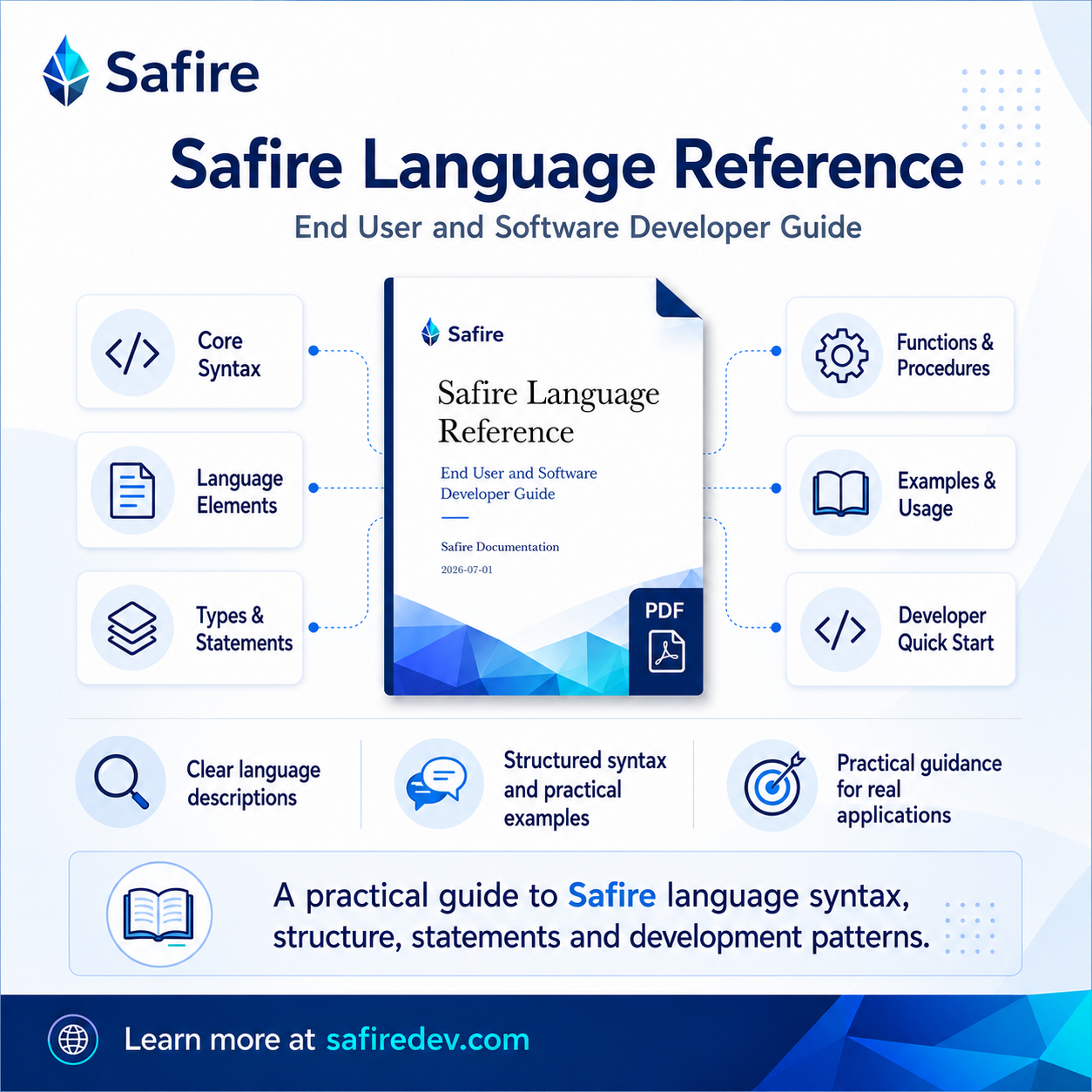
Updated alpha guide covering Safire language syntax, source-first structure, statements, procedures, classes, runtime objects and application patterns.
Open PDF
Alpha guide for windows, controls, properties, metadata, events, bindings and practical usage patterns.
Open PDF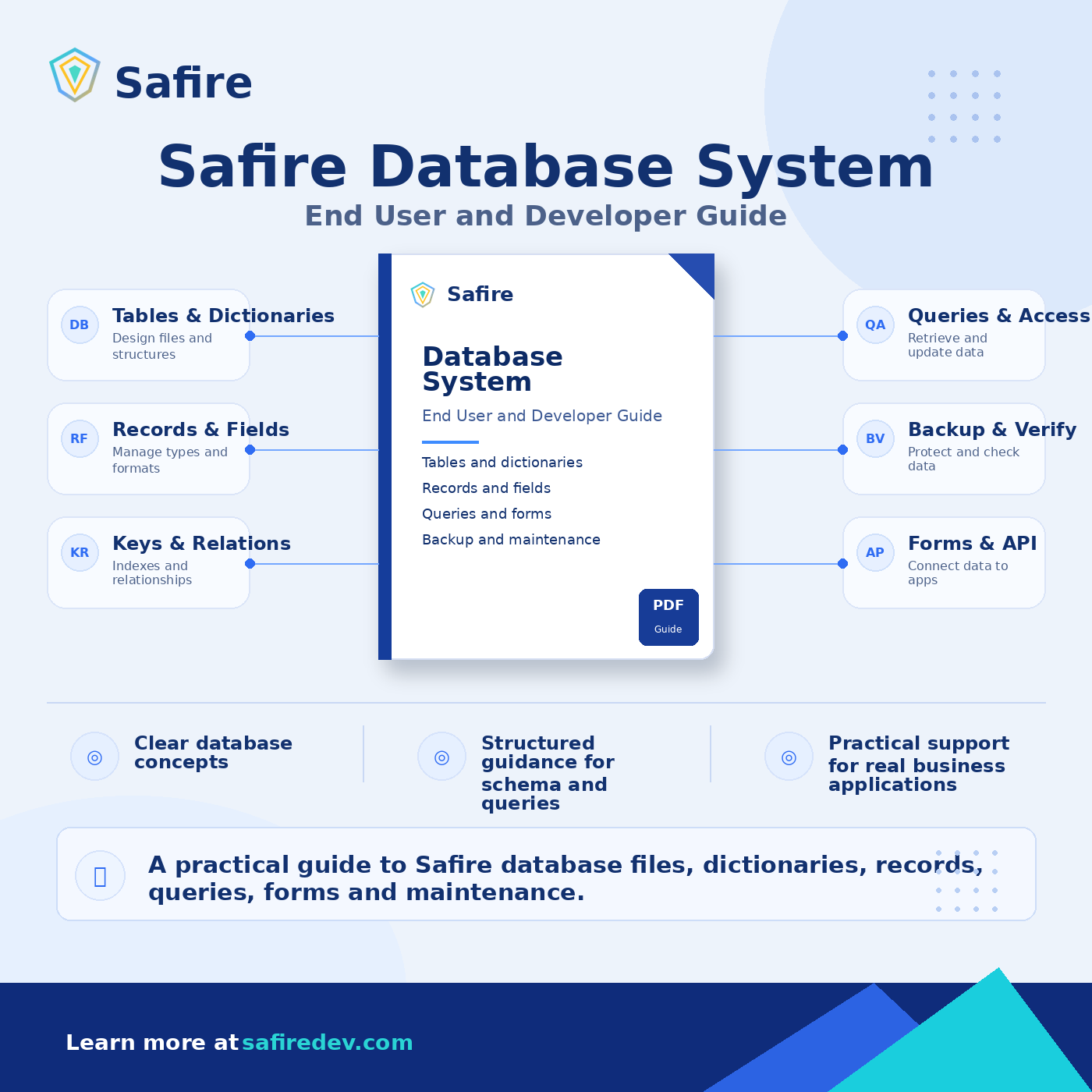
Alpha guide for database files, dictionaries, records, queries, forms, maintenance, backup and restore-preview workflows.
Open PDFSafire is in active Version 1 development. The best reviewers are experienced business software developers who know the cost of fragile tools, hidden metadata and uncontrolled AI edits.